Exhibit D · Section 6
The record of attacks and the human toll
Sudanese Intelligence Services have logged seventy drone attacks launched from Ethiopian territory between 15 February and 27 October 2026. The record shows a campaign that is escalating, widening and deliberately aimed at civilian life.
Escalation
The campaign began with isolated strikes by strategic drones from Asosa in February. From July it was joined by massed salvos of suicide drones from the Ethiopian side of Kurmuk. October 2026 alone accounts for 28 of the 70 attacks and 97 of the 187 suicide drones recorded, more suicide drones than in all previous months combined.
Incidents per month
Weapons expended per month
Figure 15. Monthly incidents by weapon class and weapons expended, February–October 2026, derived from the incident log in Annex A. October covers 1–27 October 2026.
The charts could not be loaded. The same figures appear in the full report (PDF).
Geography
Fifty of the attacks struck Blue Nile State: its capital Ad-Damazin, the displaced-persons site at Wad el-Mahi and the border localities of Kurmuk, Al-Baraka, Al-Kaili, Dindiro, Geissan, Bout and Um Darfa. The remaining twenty reached far into the interior: Khartoum (five attacks, including the international airport), North Kordofan (seven, including El Obeid, Er Rahad and Umm Ruwaba), White Nile State (three, including the Um Dabakir and Tendalti power stations), Sennar State, South Kordofan, a coordinated strike on five power stations across Sennar, Gedaref, White Nile and Gezira states, and an Akıncı sortie against army positions in several states.
See every launch area and target on the map
Consolidated casualties
| Weapon class | Civilians killed or wounded | Military killed | Military wounded |
|---|---|---|---|
| Strategic drones | 270 | 87 | 108 |
| Suicide drones | 214 | 89 | 92 |
| Total | 484 | 176 | 200 |
Beyond the human toll, the attacks destroyed or damaged schools, twelve fuel stations, seventeen civilian homes, the hospital at Um Darfa, a tanker depot at Um Alila, the residences of the Governor of Blue Nile Region and of senior State officials, and six power stations.
Wad el-Mahi, 9 October 2026: the massacre at Abu Shendi
On Friday 9 October 2026 suicide drones launched from Ethiopian territory struck displaced civilians at the Abu Shendi area of Wad el-Mahi locality, beside an informal gold-mining site where displaced women work. Thirty people were killed, twenty-six women and four children, and one hundred were wounded. Witnesses told AFP that survivors buried twenty-six women and four children. The Governor of the area stated that the drone had been launched from inside Ethiopia.15 It is the deadliest single attack recorded in the incident log.
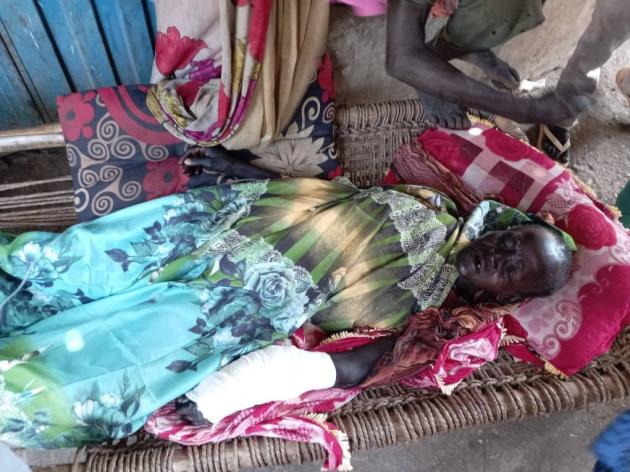
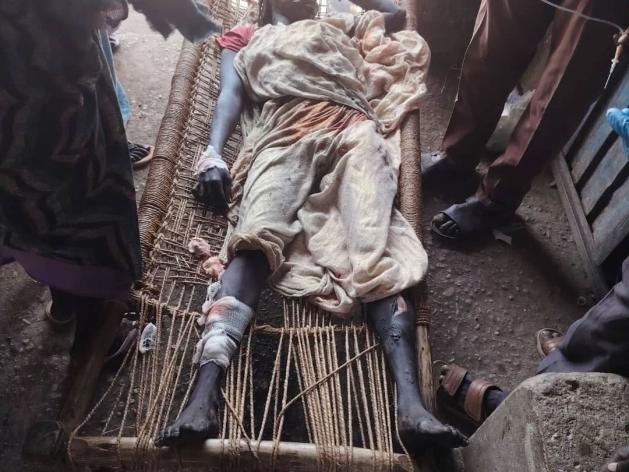
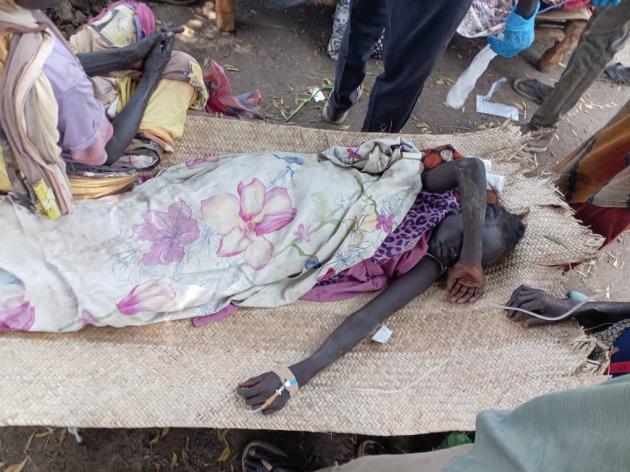
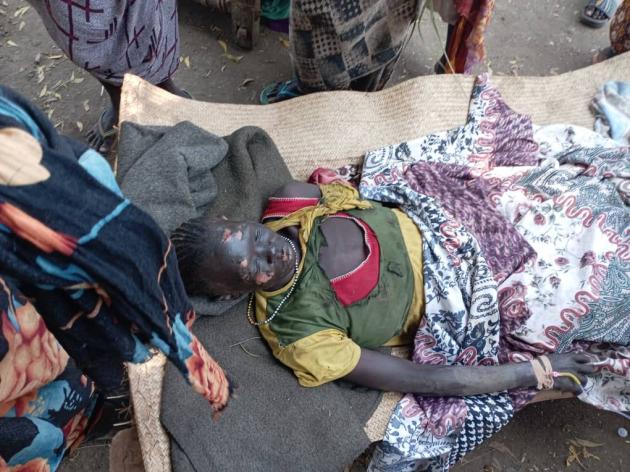
Graphic content. These photographs show wounded civilians after the attack on displaced families at Abu Shendi.
Khartoum, 19 October 2026: three children killed
On 19 October 2026 suicide drones attacked Khartoum International Airport and the adjoining residential districts of Burri and Nasser Extension. A drone struck a family home and killed three children aged two, four and six.16 The incident log records four suicide drones launched from Ethiopian territory in this attack. The Spokesperson for the UN Secretary-General declared the United Nations alarmed by the continued deadly drone strikes killing civilians, including children.17
Ad-Damazin and Um Darfa: a capital under siege
Throughout September and October, Ad-Damazin, the capital of Blue Nile State, was attacked repeatedly: the State Government headquarters (14 suicide drones, 13 September), Ad-Damazin Airport, the residences of the Regional Governor and of the Commander of the 4th Infantry Division (10 suicide drones, 3 October), and the homes of the State spokesperson and of the Minister of Finance (7 October: five civilians killed, ten wounded). On 11 October suicide drones destroyed the hospital at Um Darfa and a fuel station.
The national power grid
From late October the campaign turned against the infrastructure on which every Sudanese household depends. On 26 October 2026 strategic drones launched from Asosa struck five power stations in a single wave: Singa (Sennar), Al-Fao and Al-Hawata (Gedaref), Mashkour (White Nile) and the Al-Junaid transformer station (Gezira), putting all five out of service. On 27 October suicide drones destroyed two main transformers at the Al-Markhiyat station in Omdurman, leaving large parts of the capital without electricity for more than twelve hours.18 Electricity drives water pumping, hospitals and food storage; its destruction strikes directly at objects indispensable to the survival of the civilian population.
| Date | Attack |
|---|---|
| Tuesday 3 March 2026 | Main power station of El Obeid, capital of North Kordofan, struck in the early morning. |
| Tuesday 10 March 2026 | Um Dabakir thermal power station, White Nile State: two transformers set ablaze; power cut across large parts of the State. |
| Tuesday 20 October 2026 | Power station at Tendalti, White Nile State. |
| Monday 26 October 2026 | Five stations struck in one wave: Singa (Sennar state), Al-Fao and Al-Hawata (Gedaref state), Mashkour (White Nile state) and the Al-Junaid transformer station (Gezira state). All five put out of service. |
| Tuesday 27 October 2026 | Al-Markhiyat transformer station, Omdurman: two main transformers destroyed; station completely out of service; power cut to Omdurman, Khartoum and Gezira State. |
The purpose of the campaign
The pattern of targets, the reopened Khartoum airport, residential districts, hospitals, displaced-persons sites and the power grid, reveals the purpose: to terrorise civilians, to prevent the return of the displaced to Khartoum and the liberated areas, and to break the functioning of the Sudanese State. These are war crimes, and those who launch them bear responsibility for them.